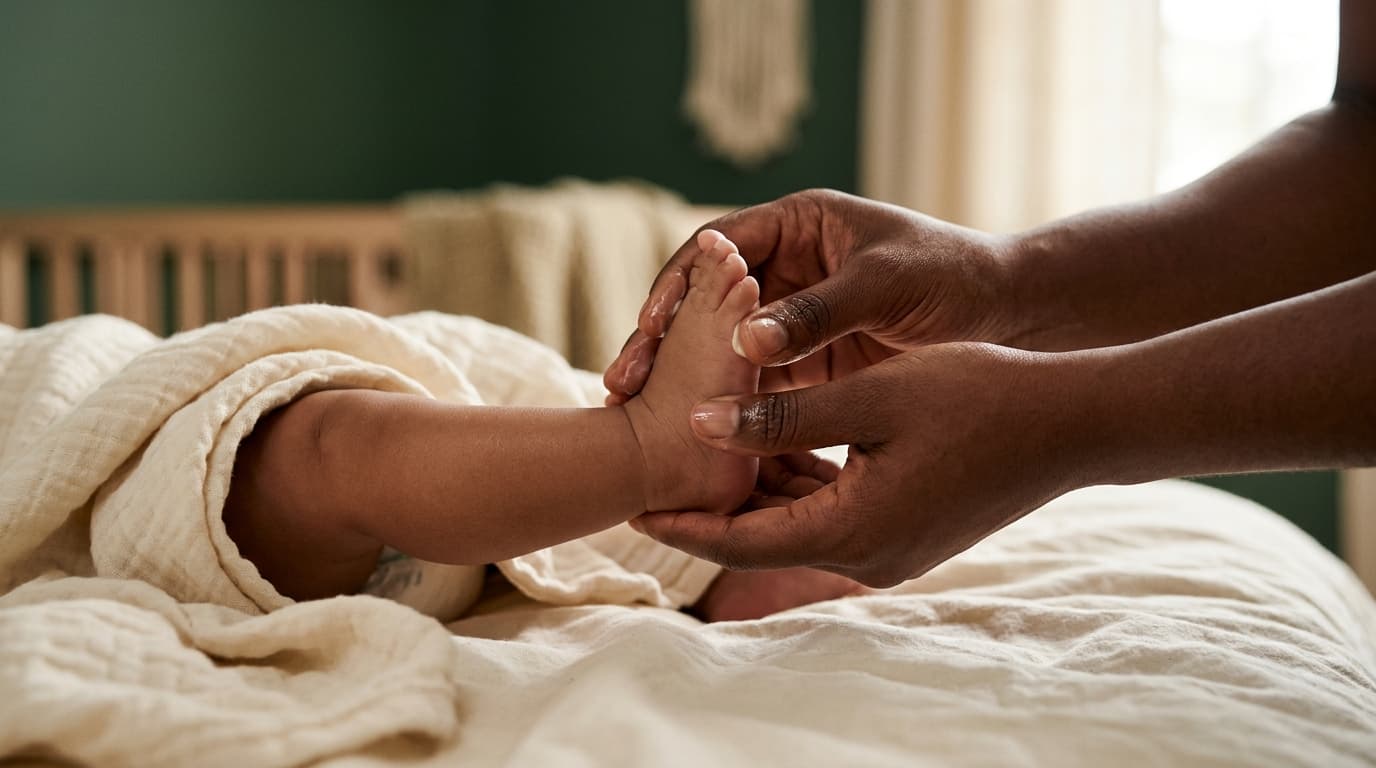
Shea butter has been used on infants across West Africa for generations, and it remains a common choice for delicate skin. The reasons are worth understanding, and so are the two situations where it is worth pausing.
Why parents reach for it
Infant skin is thinner than adult skin and loses water faster, which is why dryness is so common in the first year. A simple occlusive helps, and the appeal of pure unrefined shea is mostly about what is absent from it.
- No added fragrance, a frequent trigger for sensitive skin
- No preservatives, because a water free fat does not need them
- No colourants, dyes or synthetic emulsifiers
- A single ingredient, so any reaction has one obvious cause
That last point is the practical one. With a one ingredient product you can identify a problem. With a twenty ingredient lotion you cannot.
The tree nut question
Shea comes from a tree nut, which understandably worries parents. Two things are relevant. Shea butter is a fat, and the allergenic proteins in nuts are largely removed during extraction, which is why reactions are considered rare. Shea is also not among the tree nuts most commonly associated with allergy.
Rare is not never. If there is a known nut allergy in the family, this is a conversation to have with your paediatrician before the first application rather than after.
Patch testing
Worth doing with any new product on an infant, and it takes almost no effort:
- Apply a small amount to a coin sized area, the inner forearm is convenient
- Leave it uncovered and do not wash the area
- Check at intervals over the next twenty four hours
- Redness, bumps or obvious irritation means stop and do not continue
How to apply it
The same timing rule applies as for adults, and matters more here because infant skin dries faster. Apply after a bath while the skin is still damp, using far less than you would expect.
- Warm a small amount between your palms until it melts to a clear liquid
- Smooth it on gently rather than rubbing it in
- Focus on the areas that actually get dry: cheeks, shins, feet, the backs of the hands
- Keep it away from the eyes, and off the hands if your baby is teething and constantly mouthing them
For nappy area use, a thin layer is common practice, but persistent nappy rash needs a proper barrier product and a look from your health visitor or doctor rather than a moisturiser.
When to ask a doctor
Shea butter is a moisturiser. It is not a treatment, and the following are worth a professional opinion rather than a jar:
- Diagnosed eczema, or dryness that is not improving
- Any known or suspected nut allergy in the family
- Broken, weeping or infected skin
- Newborns in the first weeks, where less on the skin is generally better
Your paediatrician knows your child's history. Nothing written here replaces that.