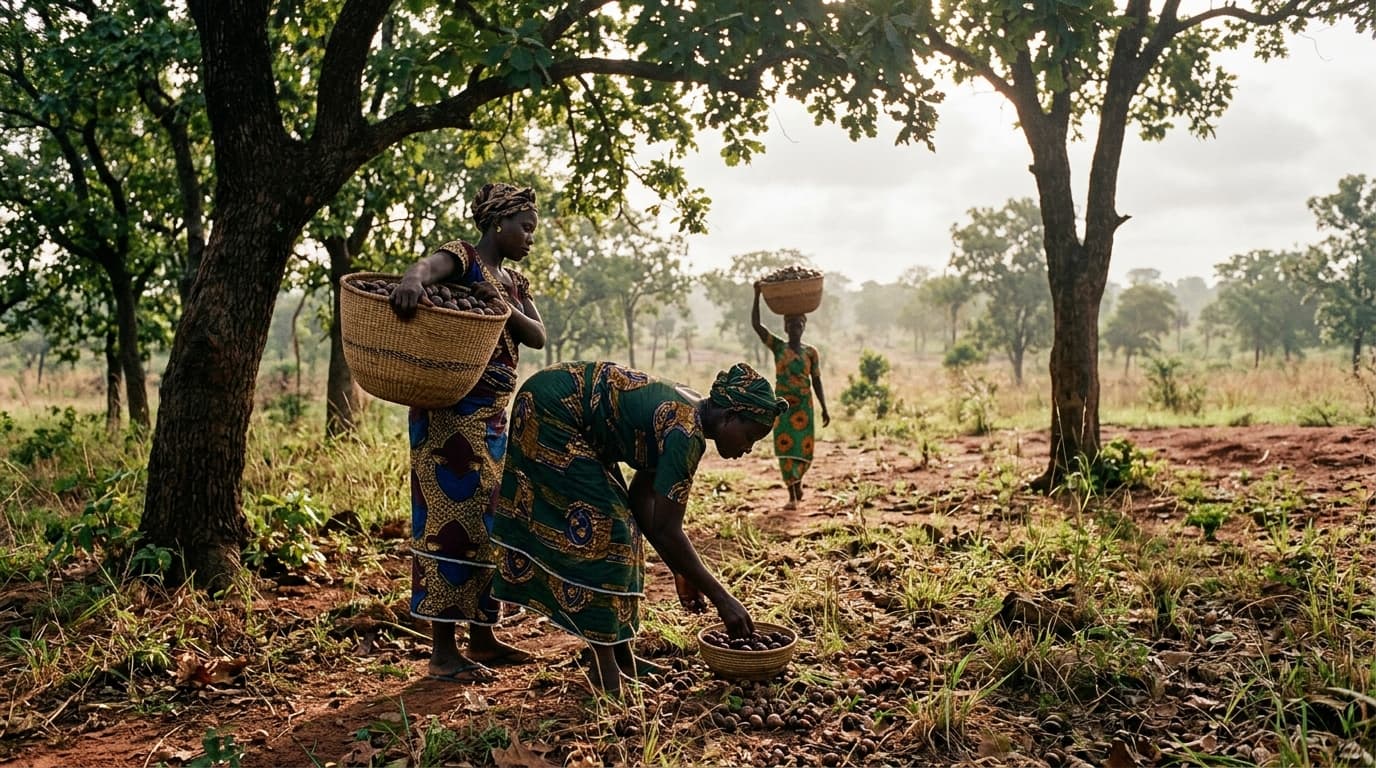
Shea is often called women's gold in West Africa. The phrase is accurate about who does the work and optimistic about who keeps the proceeds, and the gap between those two things is the reason sourcing terms matter.
Where the belt runs
The shea belt is a band of savannah roughly five thousand kilometres wide, running from Senegal through to Uganda. Nigeria sits in the middle of it and is among the largest producers of shea nuts in the world, though a comparatively small share of what leaves the country leaves as finished butter.
The trees grow wild. They are not planted in orchards, because a shea tree takes about fifteen years to fruit and decades to reach full yield, which no commercial planting cycle will wait for.
Whose work it is
Collection and processing are done overwhelmingly by women, and the knowledge passes between generations rather than through any formal training. In many communities the right to collect from particular stands of trees is understood, respected and inherited, without ever being written down or registered.
The season
Fruit falls between roughly May and August, which overlaps with the rainy season and with the farming calendar. That timing is part of why shea income matters: it arrives in the lean months before the main harvest, when household cash is thinnest.
Collection means walking, often several kilometres, gathering fallen fruit from the ground, and carrying it back. The pulp is removed and frequently eaten. The nut inside is what becomes butter.
Why it is skilled work
It is easy to describe this as gathering, which makes it sound unskilled. It is not. Several judgement calls determine whether a batch reaches Grade A at all:
- Drying. Too slow, or rained on midway, and the nuts develop mould and high free fatty acid content
- Sorting. Cracked, discoloured and under ripe kernels have to be pulled by hand, and missing them shows in the finished butter
- The roast. Under roast and yield drops, over roast and a burnt note enters the butter and never leaves
- The knead. How long the paste is worked determines whether the fat separates cleanly
Where the value goes
Historically most of the margin has settled far downstream. Nuts are bought at the village gate by aggregators, consolidated, and exported largely as raw material. The processing that adds most of the value happens elsewhere, and so does the profit from it.
Gate buying also exposes collectors to price swings they have no ability to absorb. A price agreed at the moment of sale, in a lean month, by someone who needs the cash that week, is not a negotiation between equals.
What fair sourcing means in practice
The phrase gets used loosely, so it is worth being concrete about what we mean by it:
- Purchase relationships agreed with cooperative groups before the season, not at the gate during it
- Buying direct rather than through open market aggregation, which is also what makes a batch traceable
- Shared processing equipment, which reduces the physical burden and improves batch consistency at the same time
- Training in handling and quality, so producers can meet an export standard and charge accordingly
None of that is charity. Consistent Grade A butter requires careful drying and honest sorting, and people paid properly and in advance have every reason to do both.
The programme this describes is set out on the Shea Value Initiative page.