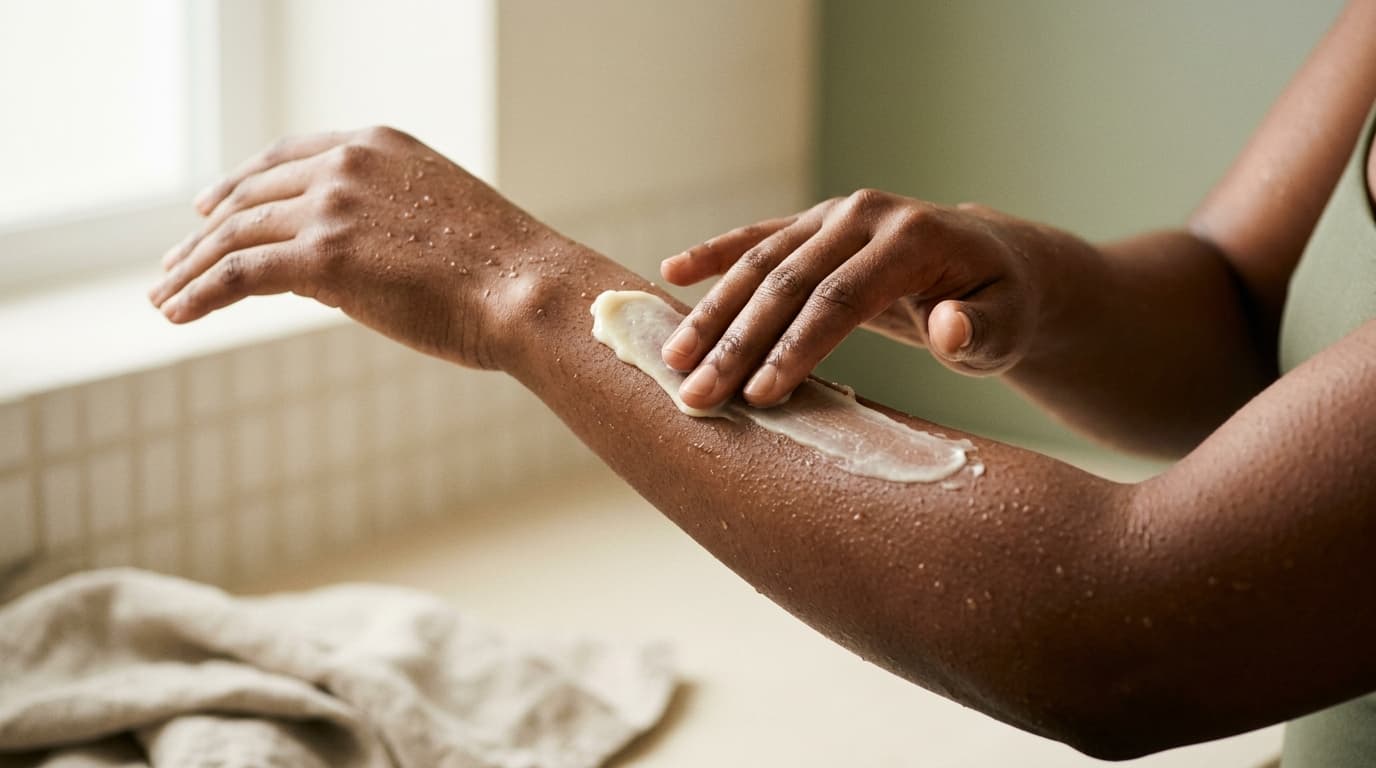
Shea butter rewards timing more than quantity. Used at the right moment a small amount outperforms a generous one applied badly, and most of the difference comes down to how wet your skin is.
The three minute window
Skin loses most of the water it picked up in a shower within a few minutes of getting out. An occlusive applied inside that window traps it. The same amount applied twenty minutes later has almost nothing left to trap.
Pat dry rather than rubbing, leave the skin visibly damp, and apply then. This single change does more than switching products.
After a shower
- Scoop roughly a teaspoon for arms and legs
- Warm it between your palms until it turns clear
- Press and smooth it in rather than rubbing hard
- Work downward on limbs, following the direction of hair growth
If it feels greasy after a few minutes, you used too much. Shea should disappear into skin, not sit on it.
Hands, elbows and heels
These are the places shea genuinely outperforms a lotion, because the skin is thicker and loses water faster. Apply last thing at night, heavier than you would elsewhere, and cover heels with socks so it stays where you put it rather than on the sheets.
On the face
Shea is moderately comedogenic, which means it can block pores on skin that is prone to that. Faces vary more than bodies do, so the sensible approach is a small amount along the jaw for a few nights before committing to full use.
It suits dry and mature skin well, and it suits oily, congestion prone skin much less. If your skin is the second kind, use it on the body and something lighter on the face.
Layering it properly
The rule is thinnest to thickest. Water or a hydrating toner first, then a serum, then shea to seal the lot. Nothing goes on top of shea, because nothing gets through it.
In cold weather this order matters more, since indoor heating strips humidity and the water loss is faster. In humid weather you may want a fraction of the amount, or none at all on the body.
For hair specifically, the order is slightly different, see using shea butter on natural hair .