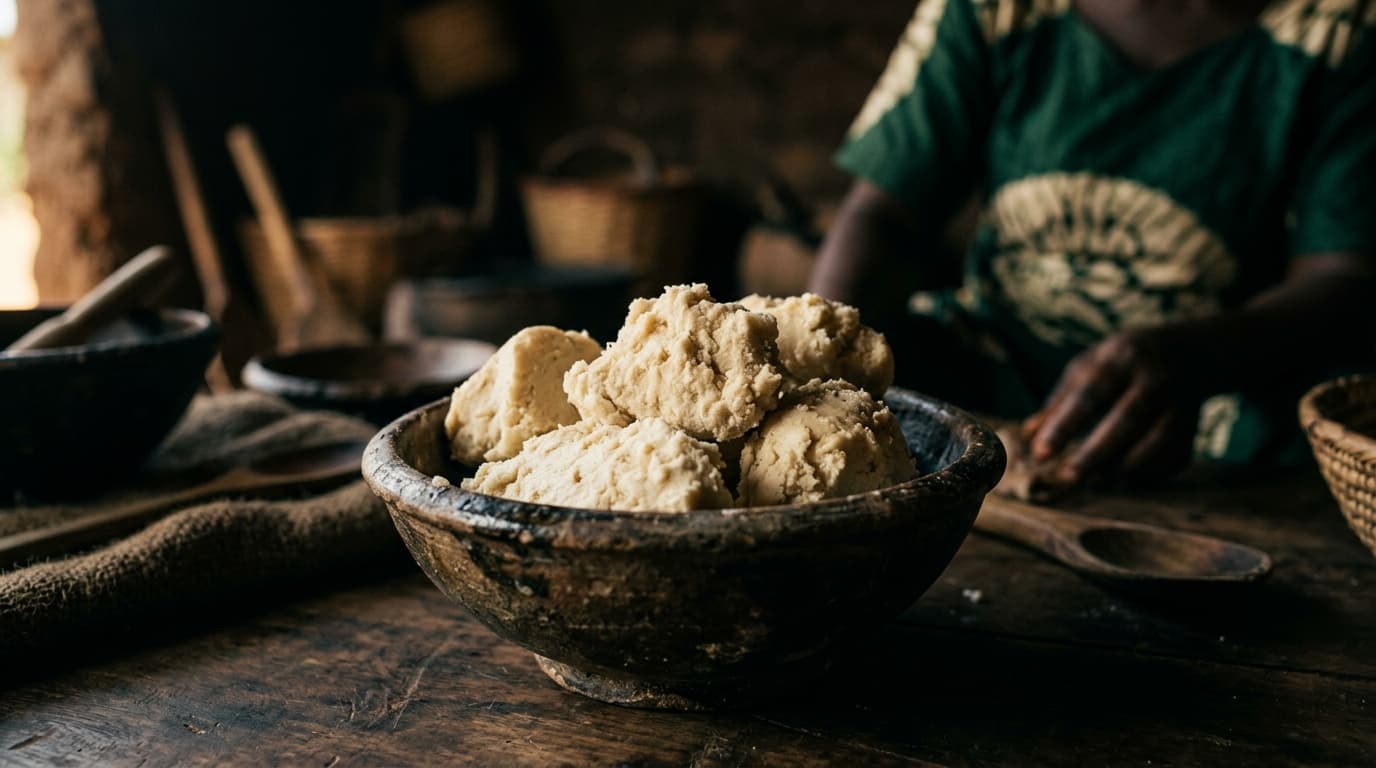
Shea butter gets described as a miracle ingredient often enough that the actual reason it works gets lost. It is not magic. It is a fat with an unusual composition, and the composition is worth understanding because it explains what shea can and cannot do.
What is actually in it
Shea butter is the fat pressed from the kernel of the shea tree nut. Roughly ninety per cent of it is fatty acids, the part that makes it a butter rather than an oil. The remaining share is where the interest lies: a group of compounds collectively called unsaponifiables, which most vegetable fats carry only in traces.
The fatty acids
The bulk is oleic and stearic acid in near equal measure, with smaller amounts of linoleic and palmitic. That balance is what gives shea its particular behaviour: stearic acid makes it solid at room temperature, oleic acid keeps it soft enough to melt on contact with skin.
It is also why shea changes with the weather. A jar that is firm in December and soft in March has not gone off. The ratio has not changed, only the temperature.
The part that is unusual
Most plant oils contain around one per cent unsaponifiables. Shea contains somewhere between five and seventeen per cent depending on origin and processing. This fraction carries the vitamins, the tocopherols and the triterpene alcohols, and it is the first thing destroyed by aggressive refining.
Vitamin A, vitamin E and vitamin F are the ones usually named on a label. Vitamin F is not a single vitamin at all, it is a shorthand for the essential fatty acids, which is worth knowing when you are reading marketing copy.
Why skin accepts it
Human sebum is largely oleic and palmitic acid. Shea's profile sits close enough that it spreads and absorbs without the greasy film a heavier occlusive leaves. It works mainly as an emollient and an occlusive: it fills the gaps between skin cells and slows water loss through the surface.
That distinction matters in practice. Shea does not add water to skin. It holds in water that is already there, which is why it works far better on damp skin than on dry.
Telling good from ordinary
- Colour should be ivory to pale yellow, never bright white
- Smell should be faintly nutty, not perfumed and not absent
- Texture should give under a fingertip and melt on contact
- Grain is normal, and usually means it cooled slowly rather than being whipped
If it is odourless, snow white and behaves like a cosmetic base, the unsaponifiable fraction has been processed out and what remains is mostly just fat.
For what refining actually removes, see refined or unrefined, what changes .